
December Commonplacing
things floatiing around my brain and my computer

I might have found my ultimate Christmas record:
Hideous discoveries and monstrous crime
Always happen at the Christmas time
Hideous discoveries and monstrous crime
Always happen at the Christmas time
For the old year murders and the tragedy
For the New Year serious calamity
What shocked Trinidad
Those seven skeletons that the workmen found in that yard
What marred the Christmas festivity
Was a New Year double catastrophe
When a man and a woman on the ground was found
With bloodstains upon the ground
The husband was arrested but they were too late
For the poison he drunk sent him to the gate
That shocked Trinidad
Those seven skeletons that the workmen found in that yard
Simon Schama’s documentary series Landscape and Memory is about the struggle between production and divine nature - it links history, mythology, religion and art and is full of powerful imagery (not least a picture of ‘nature boy’ Hitler in his hiking shorts) - this first episode is about forest as place of imagination and terror.
I heard Bruce Springsteen’s Atlantic City on the radio - I had forgotten all about it! It made me tear up like and old girl and remember a time when I played this version by the Band a lot - (love the roll at 4:02) I appreciate now the gentle sartorial instructions the boss issues to his lady re her make-up, hair and stockings. What a champ & what a song. Should I go and see the biopic? I generally think biopics are diabolical, but I do like to watch them. Can’t imagine Chef as the Boss though. Convince me! After swooning over AC for a while I remembered his great Badlands-inspired Nebraska, and then I started getting super-excited about the new Bob Dylan box-set, but it’s quite pricey so I might have to delay my gratification on that front.
I love how Christmassy all the op shops are. One I went to had a pair of dick-slippers (I thought they were some kind of plush animal slippers at first). They wrapped in cellophane with a sign attached; ‘a cheeky gift.’ I know no one I could give them to.
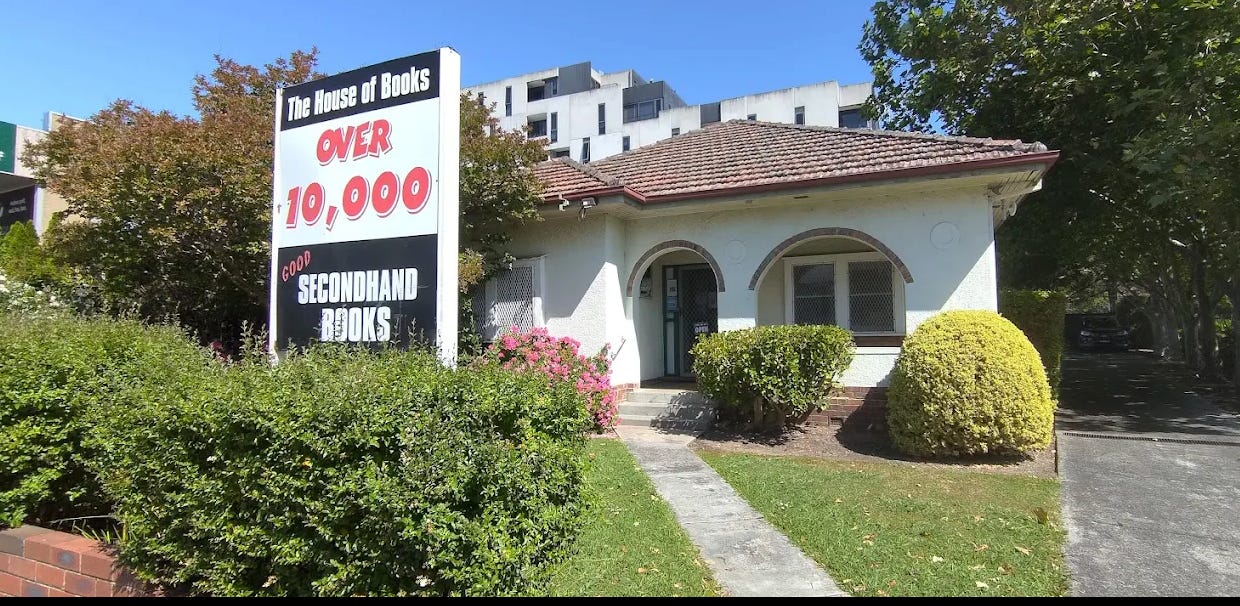
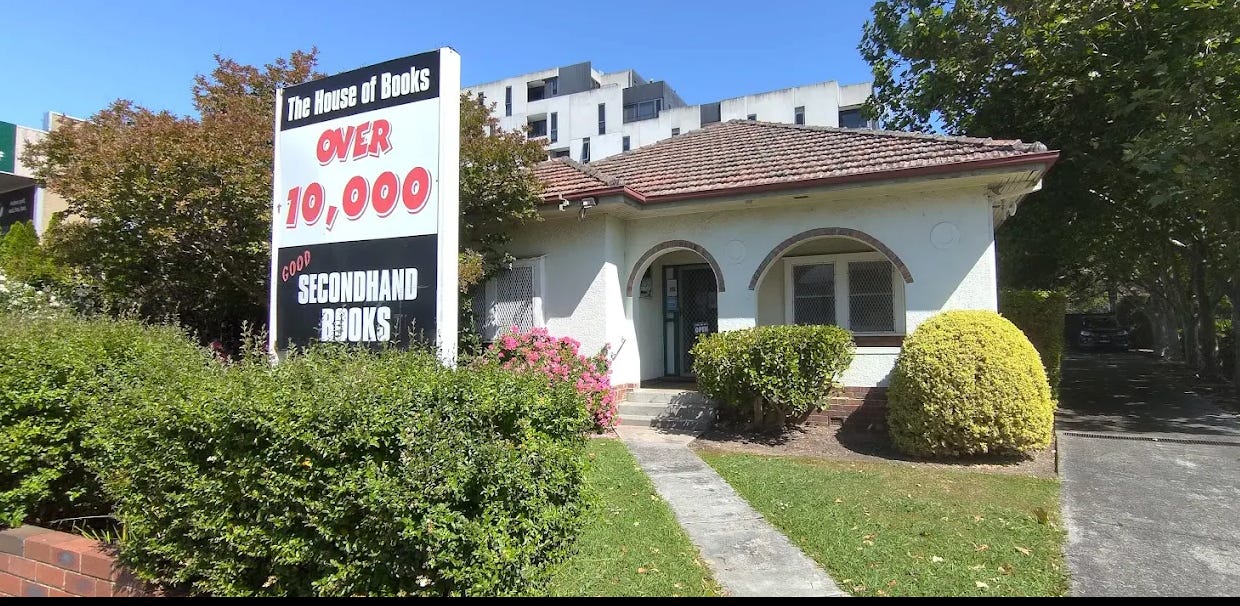
This week I managed to go to The House of Books in downtown Mitcham, where I used to catch the bus after school. Have you been there? It is an actual house on Maroondah Highway stuffed with - as the sign boasts -10,000 + books of all kinds (all donated). It’s attached to a church, and run by volunteers, but unlike most op-shop these days who are sending ‘old’ books straight to recycling, it had many old and tattered paperbacks - a whole wall of Penguins. I recommend a visit if you like that kind of thing - it’s right near the train station so not hard to get to at all, and the op shops out east hold treasures untold. (Aside: why are all newAustralian books alll published in B-formet. I hate it and think it is ugly. I like a book you can slip in your back pocket.)
Barry Gifford obituary for David Lynch: in Artforum:
Dave believed, as I do, that films are, or should be, like dreams. When you enter the movie theater the “real” world is shut out. Now that you are in the thrall of the filmmakers, you must surrender and allow the film’s images to wash over you, to drown in them for two hours or so. And Dave is relentless in the way he uses imagery. Lost Highway (1997), like Blue Velvet (1986) or Eraserhead (1977), especially, is filled with unforgettable images. And we are set in a place, a city, a landscape, that is neither here nor there, a timeless form, presented within a nonlinear structure—a Möbius strip, curling back and under, running parallel to itself before again becoming connected, only there’s a kind of coda—but that’s how it goes with psychogenic fugues. Figure it out for yourself, you’ll feel better later; and if you don’t figure it out, you’ll feel even better, trust us. Trust is what it’s all about with filmmakers like David Lynch, one of the very, very few true visionaries in the history of cinema. I once asked Dave, who was a painter, why he decided to make movies, and he told me—echoing many others, including Elia Kazan, who said, “The camera is such a beautiful instrument. It paints with motion”—“because I wanted to see my paintings move.”
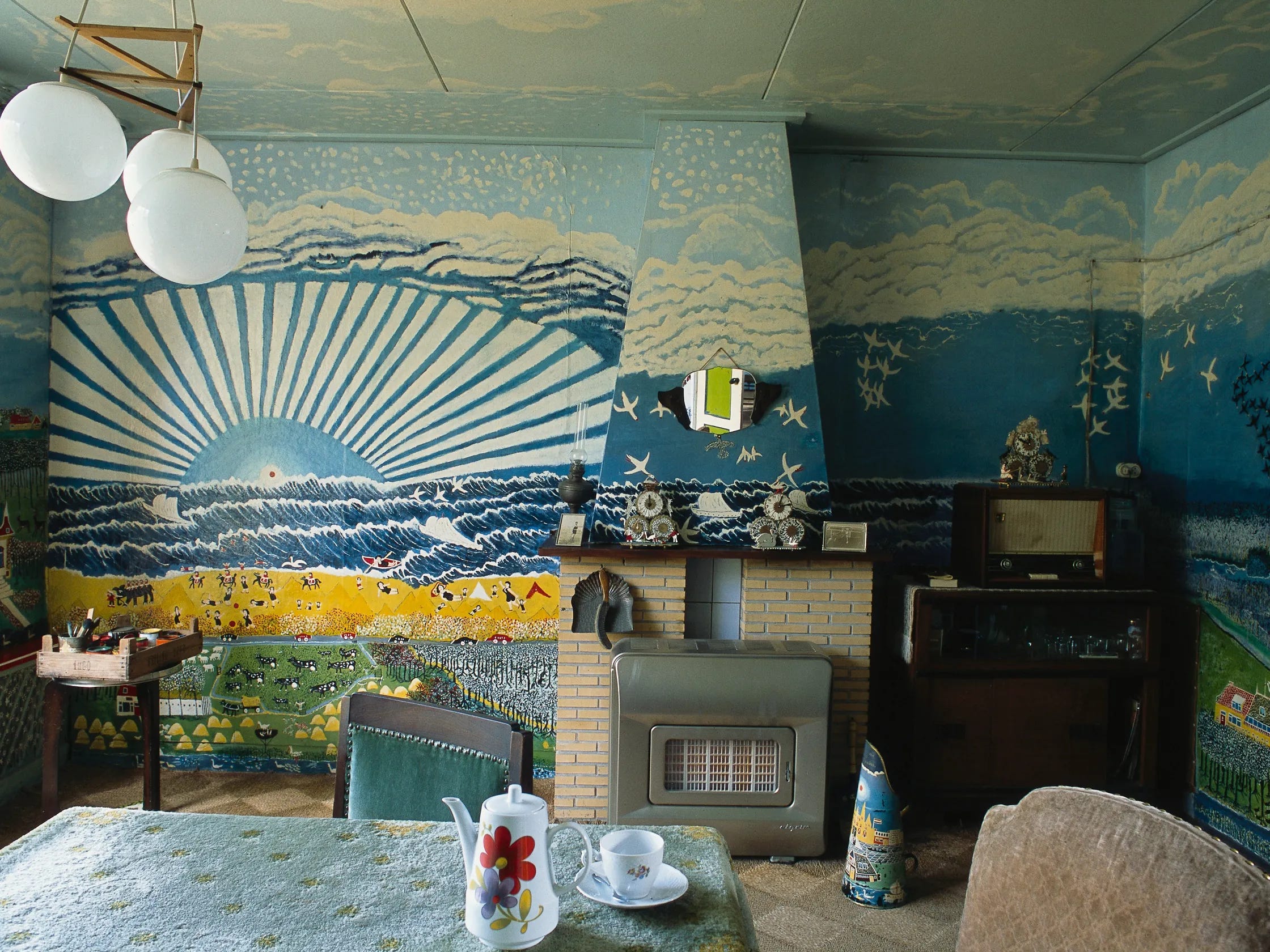
The Danish milkman who frescoed his house. This is a #lifegoal - see also Leonora Carrington and Max Ernst’s love/art house in the Arcdeche.
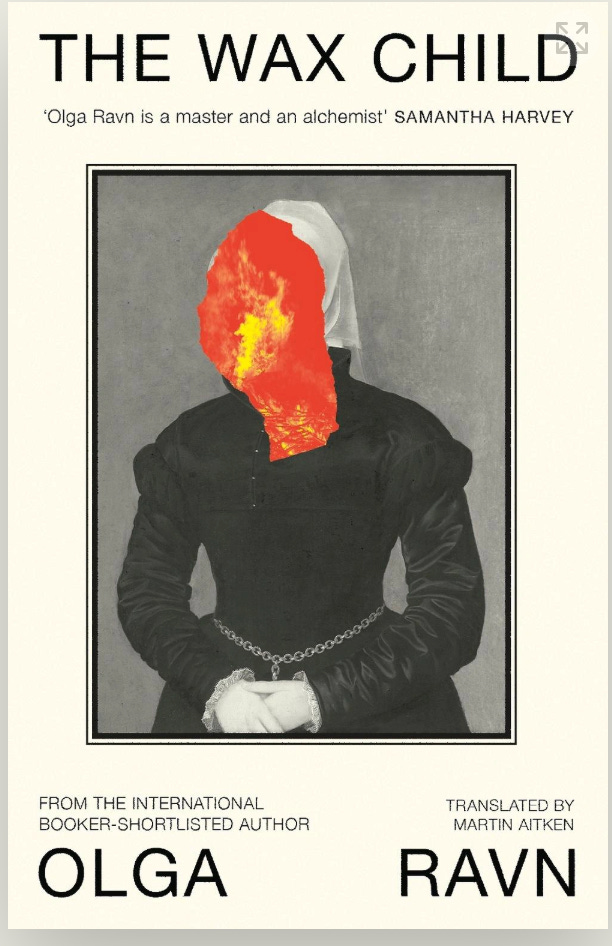
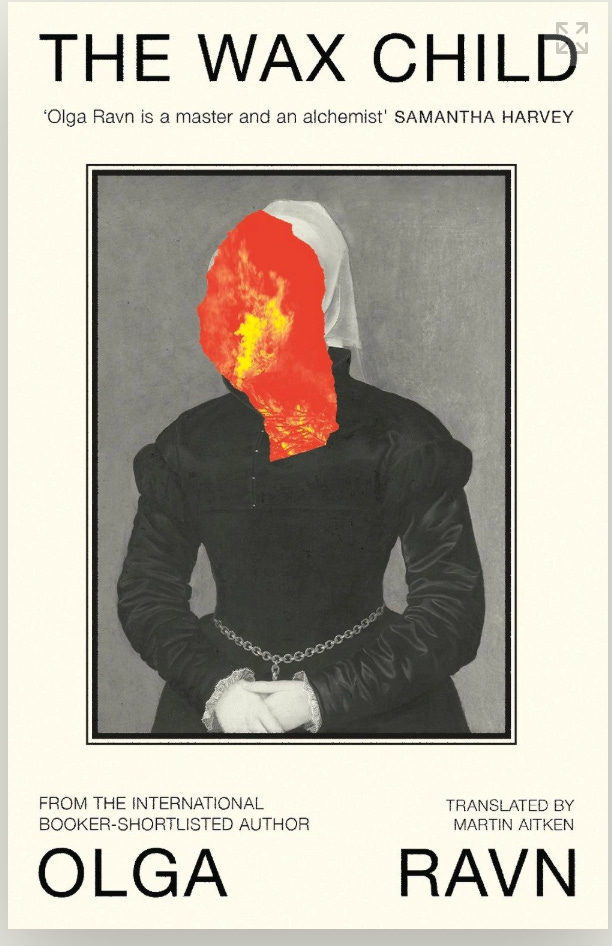
I loved Olga Ravn’s The Wax Child - and her substack is also great. You can read an excerpt of the novel in Kismet, “a new literary magazine offering a fresh perspective on spirituality, religion, and mysticism for seekers and skeptics alike.”
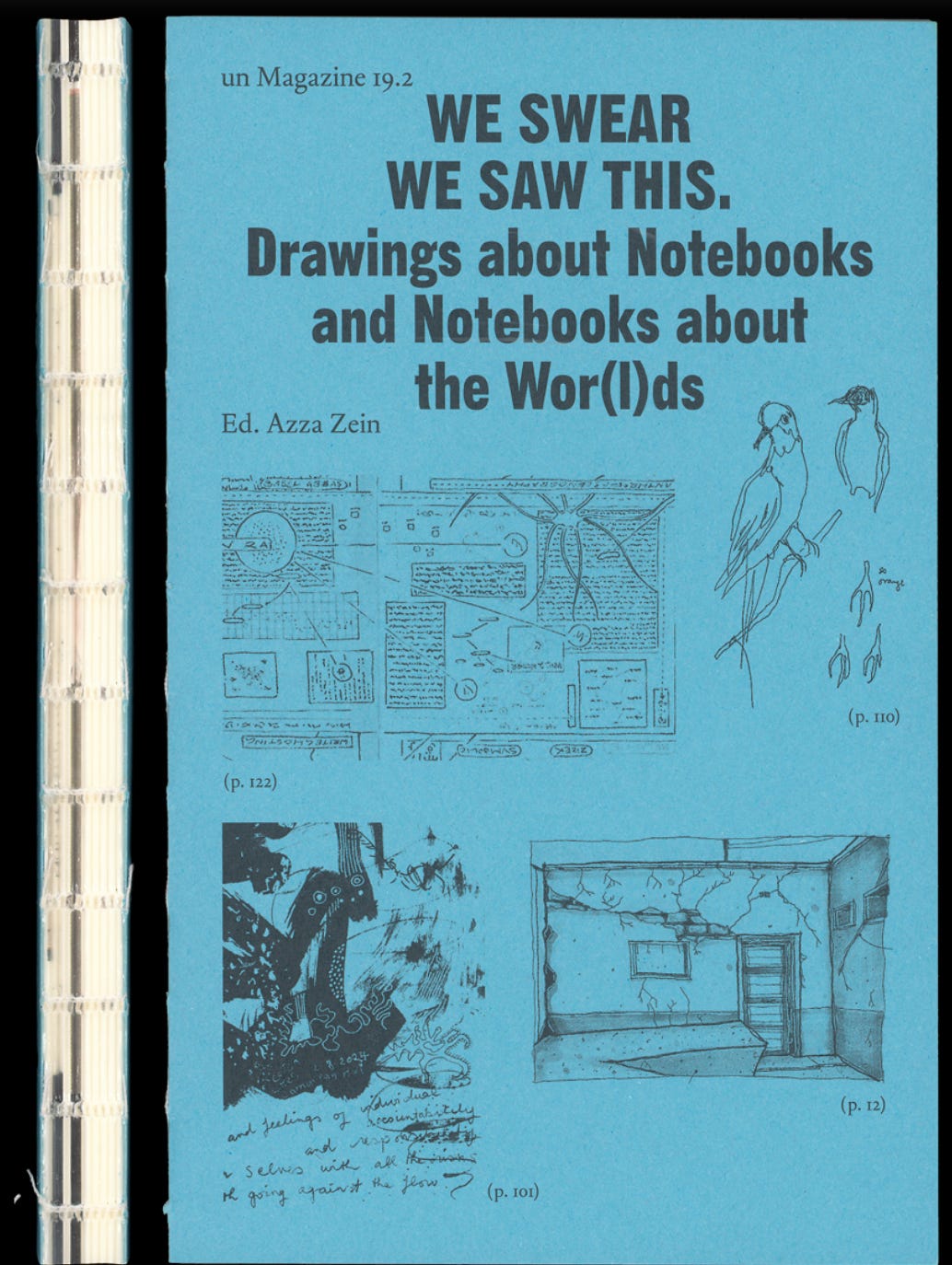
Great interview with Azza Zein about the new issue of Un Magazine: 19.2 We Swear We Saw This. Drawings about Notebooks and Notebooks about the Wor(l)ds on 3RRR’s Literati Glitterati. A discussion on the notebook as something that you bring into the world, a companion, a future site of biographical reading of artwork, a daily catharsis/documentation of the contradictions that happen, a place for raw material, a place for collaboration (sometimes) - as host Jess Zanoni says: “The notebook can be so many things: a healer, a site of refusal, translator, a mask, witnesser, technology of remembrance, a memorial technology, a method, an ethic, a precursor to a fully realised artwork.” I love my notebooks and have just started a new one!
This year I applied for a Churchill Fellowship to research creative workshops for young people that incorporate institutions of knowledge and analogue methods of being-in-the-world. I didn’t get it! But that’s okay. Most of it was in the US, and I was already trepidatious about travelling there under its current regime. Plus - I realise - I’m interested in programs for old people too! Still, the process was great for clarfiying whats and whys. In terms of research I’m a bit of a hummingbird, and also a bit of a magpie. I am a bird. Ok I am not a bird, but lately I have been thinking more about memory and writing and Hupomnemata, which, for the ancient Greeks, was what Foucault called a “technology of the self” - keeping notebooks for self-guidance and ‘material memory’. My own notebooks help me deal with the world, and this substack is also a form of life writing that I find therapeutic. I like knowing I will be able to look back on it in the same way I can my ancient blog (then 34 y.o me having a book and a baby at the same time!) So, I think next year a chunk of time will be dedicated to researching and thinking about the purpose of life writing and what meaning we can make from it.
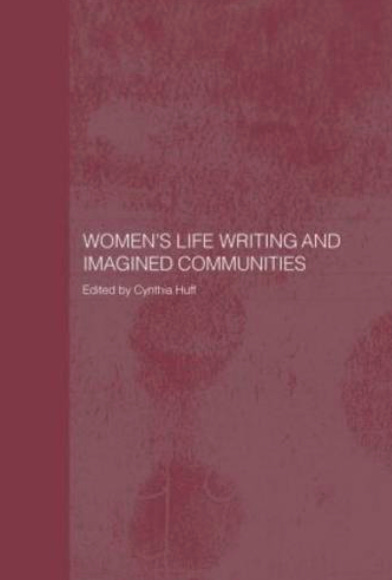
“A new geography of life writing will be a rich blend of methodologies where we dive into cultural context, where we consider collective life representations, where we as scholars interrogate our own Women’s Life Writing and Imagined Communities positionings, where we examine the non-textual media of life representation, where we reconstruct the traumatic and political dimensions of life writing, where we delineate the borders between representation and community. Such diverse and imbricated approaches are bound to uncover, in Rich’s words, ‘‘the damage that was done /And the treasures that prevail.’’
- Cynthia Huff Women’s Life Writing and Imagined Communities
-
Wonderful post. Seven Skeletons is on my list, now.
Wow. The notebooks issue of that mag. And the academic appraisal of life writing. Thank you Simmone, I have a box of notebooks I was thinking of throwing away...I will think again.