
Visual Diary #39
A Dreaming Box, Daisy Johnson's 'Long Wave', All Roads Lead to Hollywood

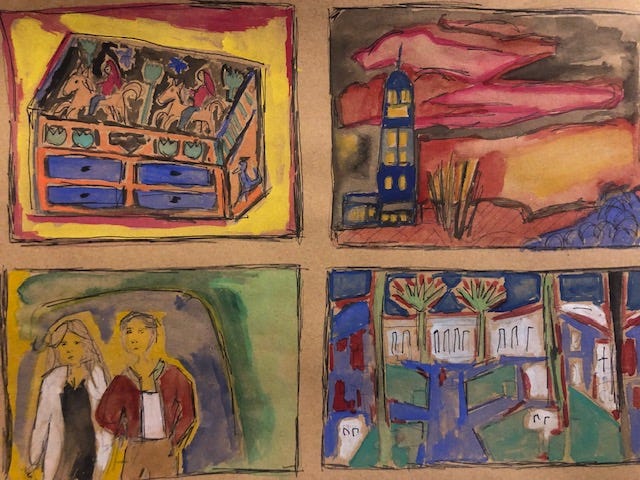
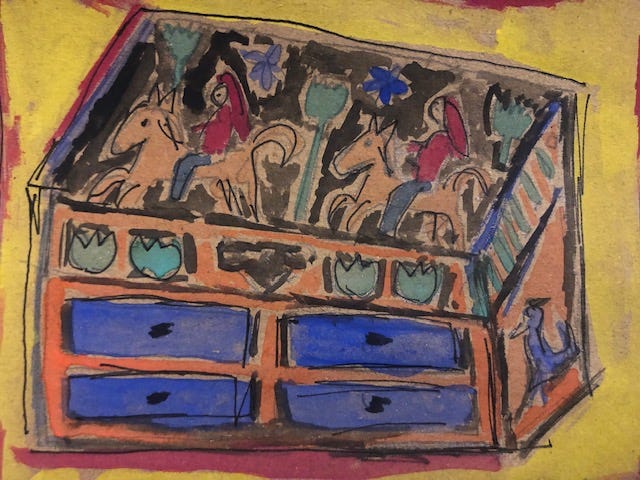
“I pulled open the drawers. There was a tiny treasure carefully laid in each; a pressed violet, fine as tissue paper, a flake of orange coral, an ear of barley, a scatter of coloured grains of sand.”
I read The Sea is Singing by Rosalind Kerven (1986), another eerie retro children’s book set in the Shetland Islands. In this one, Tess, out with her dog Freya hears strange singing that seems to come from the ocean. No one else can hear it! Just as well local crone Miss Tait (Jacobina) can wise her up to at least some of what is happening. Jacobina is a ‘Guardian’ - she knits messages into the Fair Isle patterns of jumpers and has Tess ferry them to ta fellow Guardian at the wool shop in the village - but who are they guarding and how is it all connected? Something something threat of a spill from the oil rig where Tess’s father works? When her attempts to record the singing fails, Tess and her friends find an answer using their new ‘micro-computer’ Patterns, Danger, Whale Code, the Sea: “Teresa, doesn’t it set you dreaming?”
NB: The picture is of Miss Tait’s Dreaming Box (“from the East”): “blue men with eight arms like a spider, bright pink veiled maidens riding horses with thick curly manes, elongated lions, leopards unicorns ….”)
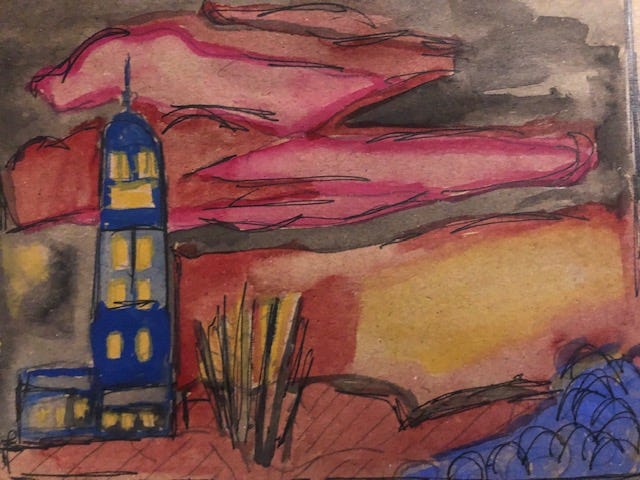
This is the lighthouse on the island of Daisy Johnson’s latest novel ‘Long Wave’. I’m listening to the audio book - the story is told in fragments and different perspectives. It’s about motherhood - lost mothers, teenage mothers, hard up mothers, and I’m yet to know if it will all come together. Woven in is the symbol of the hare, an uncanny, threshold animal, that lives above ground, that is always moving, that has no home.
Loved this interview with Daisy Johnson about writing & landscape. I’ve read most of her books now. She is a dreamy, spooky, visceral fave.
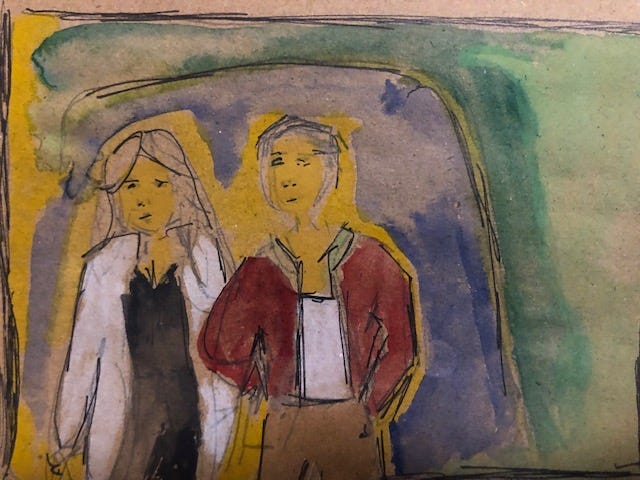
Oh gawd, I watched The Shards. When I read the book last summer (or was it the summer before?) I found it numbing but also a bit thrilling (???) I’m not into Ryan Murphy, but the show is so shiny like a Maxfield Parrish painting comes to life. It makes me feel queasy. The acting is eh, but the soundtrack is everything. This is Debbie and Bret at the club with all the TVs playing The Buggles Video Killed the Radio Star, moving into Fleetwood Mac doing Tusk (watch for bonus Stevie Nicks baton twirling). I was ten in 1981, already obsessed with videos and spellbound by adult darkness but also pop brightness. The eighties were going to be rad! Sometimes I went with my mum to aerobics and after wards she let me have an energy drink. Pow! Most of the reviews I’ve looked at talk about how the fictional serial killer inserted into Easton Ellis’ memoir of his senior year is a metaphor for AIDS. So that’s interesting. Anyway, I’ll persist, and I’m rereading the book now. Sick.
“The driver turned off Vine on to Sunset, going west. Hollywood, here I am, I thought, my heart pounding with excitement; this is where I belong, this is my destiny, this big car and this chauffeur and this rich woman by my side are not strange - all this is an omen as infallible as those funnel-shaped black clouds back home are omens and everyone knows what surely will happen. That’s not right, I thought quickly, a little frightened that I had likened what was going to happen to me to what was going to happen to a town that saw one of those clouds approaching; that’s not what I meant to think, I thought.”
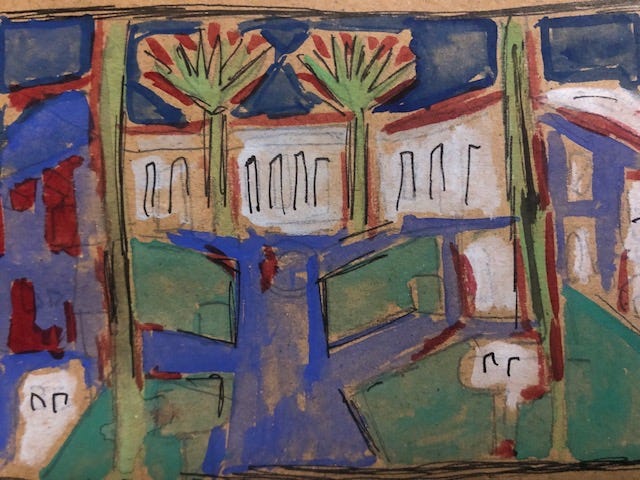
And this is the bungalow apartments where Hollywood extras Ralph and Mona live in Horace McCoy’s I Should Have Stayed Home (1938). Ralph is a naive transplant from Georgia who looks great but needs to lose his accent. Mona is his wiser older-sister type; for her, the dream is wearing thin. While Ralph gets groomed by a wealthy, connected older woman, Mona starts agitating for work rights … a short novel, clipped and brutal, with everything going pretty much how you might imagine. Oh, old Hollywood! From the introduction by Paul Buck: “McCoy’s arrival in Hollywood in early 1931 was filled with ambition. He wanted to break into movies as a writer and actor. Instead he joined the other 20,000 extras out of work. This experience became his first novel They Shoot Horses, Don’t They? … The French regarded McCoy along with Hemingway and Faulkner as all that was best in American writing of the time. Camus, Sartre, de Beauvoir and Malraux all saw McCoy’s novel as the first American existentialist novel…”
After reading this short novel I read Ottessa Moshfegh’s “Nothing Ever Happens Here” which feels like a homage, blacker, post-modern, funnier. And look, now I’ve found this to read, but I’m getting tired so I’ll save it for tomorrow.